
Getting your yard level can make a big difference. It helps water drain right, makes mowing easier, and gives you a flat spot for playing or relaxing. But how much dirt do you actually need?
To figure out how much dirt to level a yard, you don’t have a single answer. It’s not a one-size-fits-all thing. How much you need depends on your yard’s size and how uneven it is. You’ll need to measure the low spots to calculate cubic yards dirt. This helps you estimate dirt needed for grading. You’ll likely use fill dirt for leveling yard as the base material.
Let’s walk through how to measure, plan, and get the job done.
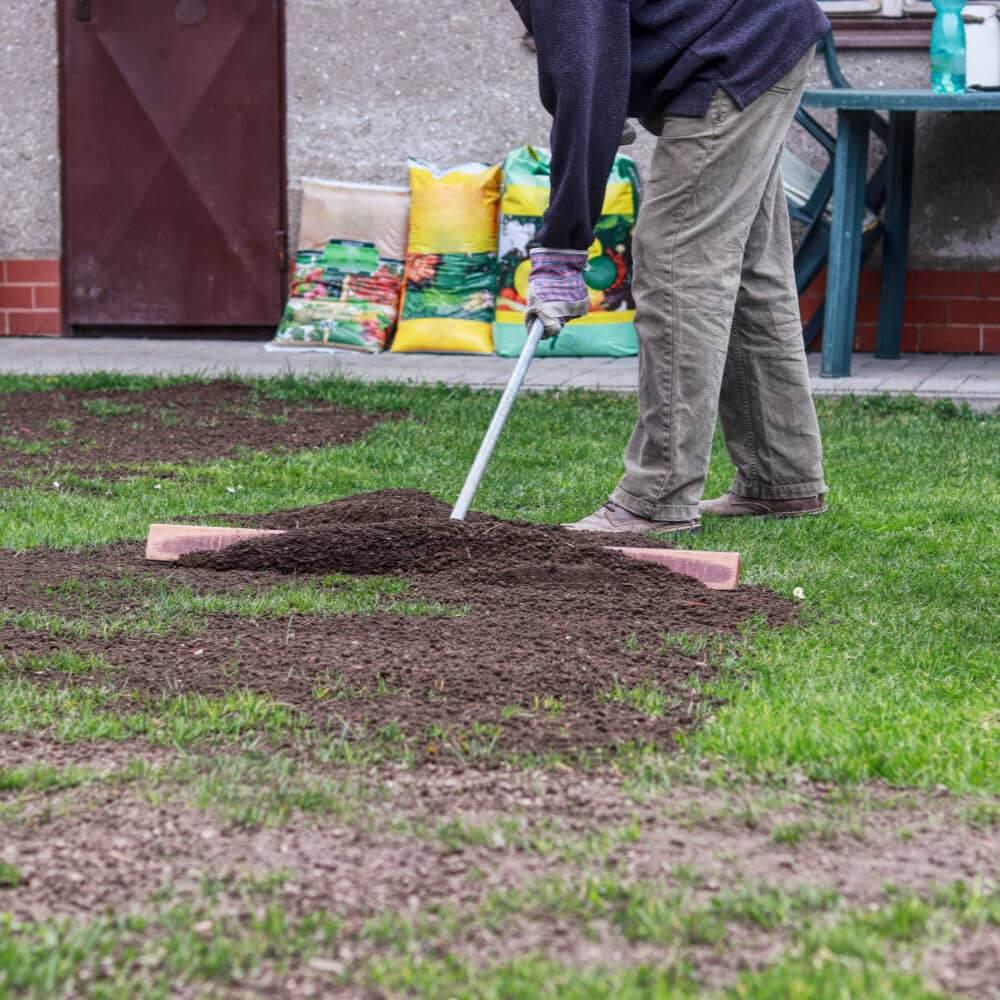
Image Source: dam.thdstatic.com
Why Make Your Yard Flat?
Making your yard level does more than just look nice. It’s important for many reasons.
- Water Flow: An uneven yard can trap water. This creates puddles. Puddles can hurt grass roots. They can also send water towards your house foundation. A level yard helps water move away properly. This protects your home.
- Yard Work: Mowing a bumpy yard is hard. It can be rough and even break mower parts. A flat yard is much easier and safer to mow.
- Usefulness: You can use a level yard more. It’s good for kids to play on. You can put up swings or build a shed more easily. Outdoor furniture sits better on flat ground.
- Look: A smooth, level yard just looks better. It gives your home a finished feel.
Getting Ready to Level Ground
Before you order any dirt, you need a plan. This helps you know how much dirt to get. It also helps the work go smoothly.
Checking Local Rules
Sometimes, cities or towns have rules about adding lots of dirt to your yard. This is often about how water drains. Adding dirt can change water flow. This might affect your neighbors. Call your local building department. Ask if you need a permit. This step is important.
Finding What’s Below Ground
You must know where pipes or wires are buried. This stops you from hitting them when digging or leveling. In the United States, call 811. This free service marks underground lines like gas, water, and electric. Always call before you dig, even just a little.
Picking the Right Season
Leveling your yard works best when the ground is not too wet or too dry. Spring or fall are often good times. Avoid working on muddy ground. Wet dirt is heavy and hard to work with. Dry, hard dirt is also tough. It’s best when the ground is just a little damp.
Figuring Out How Much Dirt You Need
This is the main part. You need to measure your yard’s low spots. Then you do some math. This tells you how much dirt to order. This is how you calculate cubic yards dirt. It’s how you get an accurate estimate dirt needed for grading.
Walking Your Yard
First, walk around your yard. Find the low spots. Note where water collects after it rains. Look for areas that dip down. Think about where you want the final ground level to be. You might just fix dips. Or you might change the slope of the whole yard.
Measuring Low Spots
The easiest way to measure is for square or rectangle low spots.
- Measure the Area: Use a tape measure. Find the length and width of the low spot in feet. Multiply length by width. This gives you the square feet.
- Example: A low spot is 10 feet long and 5 feet wide. Area = 10 ft * 5 ft = 50 square feet.
- Measure the Depth: Find the deepest part of the low spot. Measure how far down it is in feet. If it’s in inches, divide by 12 to get feet (e.g., 6 inches is 0.5 feet). If the depth changes, take a few measurements in the area. Use the average depth. Or, measure the deepest point you want to fill.
- Example: The low spot is deepest at 6 inches. Depth = 6 inches / 12 inches/foot = 0.5 feet.
- Calculate Volume: Multiply the area (square feet) by the depth (feet). This gives you the volume in cubic feet.
- Example: Volume = 50 square feet * 0.5 feet = 25 cubic feet.
Measuring Uneven Areas
Most yards are not just simple squares. They have dips of different sizes and shapes. Here’s a good way to measure uneven ground:
- Set Up a Grid: Drive stakes into the ground. Make a grid pattern over the area you want to level. A 10×10 foot grid is often good. Or use 5×5 feet for very bumpy areas. Tie string between the stakes to make clear squares. Make the string level across the area. This string shows your target height.
- Measure Depth at Grid Points: At each place the strings cross, measure the distance from the string down to the current ground level. Write down this depth for every crossing point. Do this for all the points within your grid. Also measure at the corner stakes.
- Find Average Depth: Add up all the depth measurements you took. Divide the total by the number of measurements. This gives you the average depth you need to fill across the whole grid area.
- Example: You have a 20×30 foot area. You use a 10×10 foot grid. You’ll have points every 10 feet. This makes 3 rows of 4 points (including edges), total 12 points. You measure depths like 0.5 ft, 1 ft, 0.8 ft, 0.3 ft, etc. Add all 12 depths. Divide by 12. Let’s say the average depth is 0.7 feet.
- Calculate Total Area: Find the total square footage of the grid area. Multiply the total length by the total width.
- Example: The area is 20 feet long and 30 feet wide. Total Area = 20 ft * 30 ft = 600 square feet.
- Calculate Volume: Multiply the total area (square feet) by the average depth (feet). This gives you the volume in cubic feet.
- Example: Volume = 600 square feet * 0.7 feet = 420 cubic feet.
Using a Dirt Calculator
There are online Dirt calculator for landscaping tools. These can help. You put in your measurements (area and depth). The calculator does the math for you. It often gives you the answer in cubic yards. This is very helpful. Just make sure you measure your low spots correctly first. The calculator is only as good as the numbers you put in.
Changing Cubic Feet to Cubic Yards
Dirt is usually sold by the cubic yard. Your measurements gave you cubic feet. You need to change cubic feet to cubic yards.
There are 27 cubic feet in 1 cubic yard.
To convert cubic feet to cubic yards, divide your total cubic feet by 27.
-
Formula: Cubic Yards = Cubic Feet / 27
-
Example using the low spot: 25 cubic feet / 27 = about 0.93 cubic yards.
- Example using the grid area: 420 cubic feet / 27 = about 15.56 cubic yards.
You will likely need more than one cubic yard. Dirt suppliers usually sell in whole cubic yards.
Here is a quick table for Cubic feet to cubic yards conversion:
| Cubic Feet | Cubic Yards (approx) |
|---|---|
| 1 | 0.037 |
| 10 | 0.37 |
| 20 | 0.74 |
| 27 | 1 |
| 50 | 1.85 |
| 100 | 3.7 |
| 200 | 7.41 |
| 500 | 18.52 |
| 1000 | 37.04 |
Adding Extra for Dirt Settling
Dirt settles over time. When you add dirt, it’s loose. It has air pockets. After it gets wet and sits, it packs down. This is called compaction.
You should order a little extra dirt to make up for settling. How much extra? It depends on the type of dirt. Fill dirt might settle 10-20%. Topsoil can settle more, maybe 15-25%.
A good rule is to add 10-20% to your total cubic yard number.
- Example (using 15.56 cubic yards from the grid):
- Add 10%: 15.56 * 0.10 = 1.56 cubic yards extra. Total = 15.56 + 1.56 = 17.12 cubic yards.
- Add 20%: 15.56 * 0.20 = 3.11 cubic yards extra. Total = 15.56 + 3.11 = 18.67 cubic yards.
So, in this example, you might order between 17 and 19 cubic yards. It’s safer to have a little too much than not enough. You can often use extra dirt in other parts of the yard or offer it to a neighbor.
Picking the Right Dirt
Not all dirt is the same. You need to choose the right type for leveling. The two main types are fill dirt and topsoil. You need to understand Topsoil vs fill dirt for leveling.
What is Fill Dirt?
Fill dirt for leveling yard is subsoil. It’s soil that’s below the top layer. It has less organic matter. It often has clay, sand, or small rocks. It’s good for filling in deep holes or raising the ground level. It packs down well.
- Pros: It’s usually cheaper than topsoil. It’s good for creating a stable base.
- Cons: It doesn’t have many nutrients for plants. It can be hard to work with if it has lots of clay or rocks. You can’t grow grass or plants directly in it.
What is Topsoil?
Topsoil is the top layer of soil. It’s rich in organic matter. This makes it dark and crumbly. It has nutrients that plants need to grow.
- Pros: Great for growing grass, flowers, and gardens. It holds water and air well.
- Cons: It’s more expensive than fill dirt. It’s not the best for filling very deep areas because it can settle more.
Which One Should You Use?
For leveling uneven ground, you often use both:
- Use fill dirt for the main bulk of the filling. Fill in the low spots most of the way with fill dirt. This saves money. It also makes a firm base.
- Use topsoil as the final layer. Add 4-6 inches of good topsoil on top of the fill dirt. This is where your grass or other plants will grow.
If you only have small low spots (a few inches deep), you might just use topsoil. But for deeper fills (more than 6 inches), using fill dirt first is better and cheaper.
When you call a supplier, ask about their fill dirt and topsoil. Ask about the quality. Good fill dirt shouldn’t have trash, roots, or big rocks. Good topsoil should look dark and feel crumbly.
Figuring Out the Cost
The Yard leveling cost depends on a few things. The biggest costs are usually the dirt itself and labor if you hire help.
Cost of Dirt
The Cost of fill dirt per yard varies. It depends on where you live. It depends on how much you buy. And it depends on the type of dirt.
- Fill Dirt: Can cost anywhere from $5 to $50 per cubic yard. The lower end is often for basic fill dirt. The higher end might be screened fill dirt (less rocks/debris).
- Topsoil: Costs more. It can range from $15 to $70 per cubic yard. Screened topsoil costs more. Blended topsoil (with compost) costs even more.
Buying dirt in bulk (by the cubic yard) from a landscape supplier is usually cheaper than buying bags from a garden center.
Delivery Cost
Dirt is heavy! You usually can’t pick up many cubic yards yourself. You’ll need it delivered. Delivery cost adds to the total. It depends on:
- How far away the supplier is.
- How much dirt you order (some suppliers have a minimum order for delivery).
- The type of truck needed (a large dump truck costs more than a smaller one).
Delivery can add $50 to $300 or more to your cost. Ask the supplier about their delivery fees.
Labor Cost
If you do the work yourself, your labor cost is zero (just your time!).
If you hire help or a company, labor is a big cost. It depends on:
- How big the job is.
- How uneven the yard is.
- What equipment is needed (shovels vs. skid steer).
- Hourly rates or project bids.
Hiring a landscaping company to level a yard can cost from a few hundred dollars to several thousand dollars. A small, simple job might be $500 – $1000. A large, complex job with significant grading could be $5000+. This cost includes their planning, getting the dirt, spreading it, and maybe even adding the topsoil and seeding.
Total Estimate
Add up your dirt cost, delivery cost, and labor cost (if hiring). This gives you a rough total Yard leveling cost.
-
Example (using 18 cubic yards fill dirt and 3 cubic yards topsoil for a large area, DIY):
- Fill Dirt: 18 yards * $20/yard = $360
- Topsoil: 3 yards * $40/yard = $120
- Delivery: $150
- Tools (renting a compactor): $75
- Your time: Free!
- Total DIY Estimate: $360 + $120 + $150 + $75 = $705
-
Example (same job, hiring a pro):
- Company bid: $3000 (this includes dirt, delivery, labor, and maybe even topsoil/seeding).
These are just examples. Get quotes from local suppliers and contractors to know the real cost in your area.
Getting and Spreading the Dirt
Once you order the dirt, it will be delivered. They will dump it in one or more piles. Choose a spot that is easy to access but out of the way. Don’t let them dump it on septic systems, drain fields, or delicate plants.
Now comes the hard part: Spreading dirt for leveling.
Tools You Need
- Wheelbarrow: To move dirt from the pile to where it’s needed.
- Shovel: To load the wheelbarrow and spread dirt in small areas.
- Garden Rake: To smooth and spread the dirt evenly.
- Leveling Rake (or Landscaping Rake): A wide, flat rake good for spreading and leveling larger areas quickly.
- Push Broom: Can help smooth fine topsoil.
- Straight Board (like a 2×4 or 2×6): A 6-8 foot long straight board is great for “screeding” or leveling the surface. You drag it across stakes or guides to get a flat finish.
- Stakes and String: To mark your target level and use as guides for leveling.
- Measuring Tape: To check depths.
- Garden Hose or Sprinkler: To lightly water the dirt for settling.
- Plate Compactor (optional but recommended for large areas or deep fills): A machine you can rent to compact the dirt layers.
The Spreading Process
- Mark Your Target Level: Use stakes and string. Set stakes in the low spots or around the area. Mark the desired final height on the stakes. Run strings between stakes at this height. This is your guide.
- Move the Dirt: Use the wheelbarrow and shovel to move dirt from the delivery pile to the low areas. Dump piles of dirt in the spots that need it most.
- Rough Spreading: Use your shovel or landscaping rake to roughly spread the dirt. Fill in the deep holes first. Don’t try to get it perfect yet. Just get the bulk of the dirt into the right areas.
- Layer and Compact (for deep fills): If you are filling more than 6 inches, add the dirt in layers of 4-6 inches. After spreading a layer of fill dirt, lightly water it. Then compact it using the plate compactor or by walking on it. This helps prevent major settling later. Repeat layers until you are close to your final level (leaving space for topsoil).
- Fine Leveling: Use the leveling rake to spread the dirt more evenly. Work the dirt back and forth. Use your straight board. Rest the board on your guide strings or stakes. Pull the board across the dirt. This scrapes off high spots and fills in low spots between the guides. This is called screeding.
- Check Your Work: Step back and look. Check for dips and high spots. Add or remove dirt as needed. Use a long level or the straight board to check flatness.
- Add Topsoil: Once the fill dirt base is level and compacted (if needed), add your 4-6 inches of topsoil. Spread this with the leveling rake. Use the straight board or rake to make this top layer smooth and even. Rake it gently one last time to remove any rake marks and make it ready for seed or sod.
Spreading dirt for leveling takes time and effort. For large areas, it’s hard work. A skid steer or small tractor with a leveling bar can make this much faster if you have access and know how to use one.
After Leveling
Once the dirt is spread and level, you need to finish the job.
Water Lightly
After leveling the topsoil, water the area lightly. This helps the dirt settle a little more and makes sure there are no hidden low spots. If you see new dips, add a little more topsoil and level again.
Plant Grass or Add Sod
The final step is getting your green lawn back.
- Seeding: Spread grass seed evenly over the new topsoil. Use the right kind of seed for your area and sunlight. Lightly rake the seed into the top half-inch of soil. Water gently and keep the soil moist until the grass grows.
- Sodding: Lay strips of sod directly onto the leveled topsoil. Make sure edges touch firmly. Water the sod well right away. Keep it moist for the first couple of weeks so the roots grow into the new soil.
Factors That Change the Job
Several things can make your yard leveling project easier or harder, and affect the Yard leveling cost.
- Size of the Yard: A small yard needs less dirt and takes less time than a large one.
- How Uneven It Is: A yard with deep holes needs a lot more fill dirt than one with just small dips.
- Slope: If you are changing the overall slope for drainage, this is more complex than just filling low spots. It requires careful planning so water flows the right way.
- Soil Type: Very clayey soil can be hard to work with when wet. Rocky soil makes spreading difficult.
- Access: Can a dump truck easily get to your yard to drop the dirt? Can you get tools like a compactor or skid steer into the work area? Tight spaces make the job harder and might need more manual labor.
- Hiring Help: Doing it yourself is cheaper but takes your time and effort. Hiring professionals costs money but saves you time and muscle. They also have the right tools and know-how.
DIY vs. Hiring a Pro
Should you level your yard yourself or hire a landscaper?
Doing It Yourself (DIY)
- Pros: Costs less money (you pay for materials and maybe tool rental). You work on your own schedule. You have control over the process.
- Cons: Requires a lot of physical labor. Takes time and effort. You need to learn how to measure correctly and level properly. You might need to rent equipment. Mistakes can lead to drainage issues or uneven results.
Hiring a Professional
- Pros: They have experience and knowledge. They have the right tools and equipment (like skid steers, laser levels). They can do the job faster. They handle getting the dirt and delivery. They can help with complex drainage problems. Saves you hard physical labor.
- Cons: Costs more money. You need to find a trustworthy contractor. You have less direct control over the day-to-day work.
For small, simple low spots, DIY is very doable. For large areas, significant changes in level, or drainage issues, hiring a pro is often worth the cost. Get quotes from a few different companies if you go this route.
What if it’s Still Not Flat?
After your first try, you might still see small dips or high spots. This is common, especially after the dirt settles.
- Small Dips: Mix some topsoil with a little sand or compost. Spread a thin layer (1/2 to 1 inch) over the dip. Rake it smooth. Seed or add sod plugs. You might need to do this yearly for a few years as the ground settles fully.
- High Spots: These are harder. You might need to carefully dig up the grass/sod. Remove some of the dirt below. Re-level the area. Put the grass/sod back or reseed.
- Drainage Issues: If you still have puddles, the problem might be bigger than simple low spots. The overall slope might be wrong. You might need to reshape a larger area or add drainage solutions like a French drain. This is where professional help might be needed.
Frequently Asked Questions
Here are some common questions people ask about leveling a yard.
h4> What kind of dirt is best for filling holes?
For deep holes or to raise the ground level a lot, fill dirt for leveling yard is best for the main part. It’s cheaper and compacts well. For the top few inches where you plant grass, use good quality topsoil.
h4> How deep can I fill with dirt?
You can fill quite deep, but for fills over 6-12 inches, it’s very important to add the dirt in layers (4-6 inches at a time) and compact each layer. This stops major settling later.
h4> How much does one cubic yard of dirt cover?
One cubic yard of dirt covers about 324 square feet if you spread it 1 inch thick. If you spread it 3 inches thick, it covers about 108 square feet. At 6 inches thick, it covers 54 square feet. Remember, this is loose dirt; it will settle.
h4> Can I use soil from other parts of my yard?
Yes, if you have high spots, you can sometimes move that soil to fill low spots. This saves money. Just make sure the soil you move is suitable. Avoid using soil full of roots, rocks, or construction waste. You’ll likely still need to bring in topsoil for the final layer.
h4> How do I make sure the dirt is level?
Use stakes and strings set to your desired height as a guide. Use a long, straight board (like a 2×4) to drag across the surface, resting it on your guides, to scrape high spots and fill low ones. A long level or a laser level can also help check flatness.
h4> How long does it take for the dirt to settle?
Most settling happens within a few weeks or months, especially after rain. But some settling can continue for up to a year. Compacting the fill dirt layers helps a lot.
Wrapping Up
Figuring out how much dirt to level yard takes a little effort, but it’s necessary for a good result. Start by measuring your low spots carefully. Use a grid system for uneven areas. Calculate cubic yards dirt by finding the volume in cubic feet and dividing by 27. Remember to add extra for settling.
Choose the right materials – fill dirt for leveling yard as a base and topsoil on top. Get estimates for the Cost of fill dirt per yard and delivery. Consider the total Yard leveling cost if you hire someone.
Spreading dirt for leveling is hard work, but using the right tools makes it easier. Level in layers for deep fills. Use guides and a straight board for a smooth finish. With planning and effort, you can turn an uneven yard into a flat, usable space you can enjoy.